Understand your hormones. Know what to do next.
Your hormones influence many aspects of your health, from your menstrual cycle and reproductive function to metabolism and general wellbeing.
The
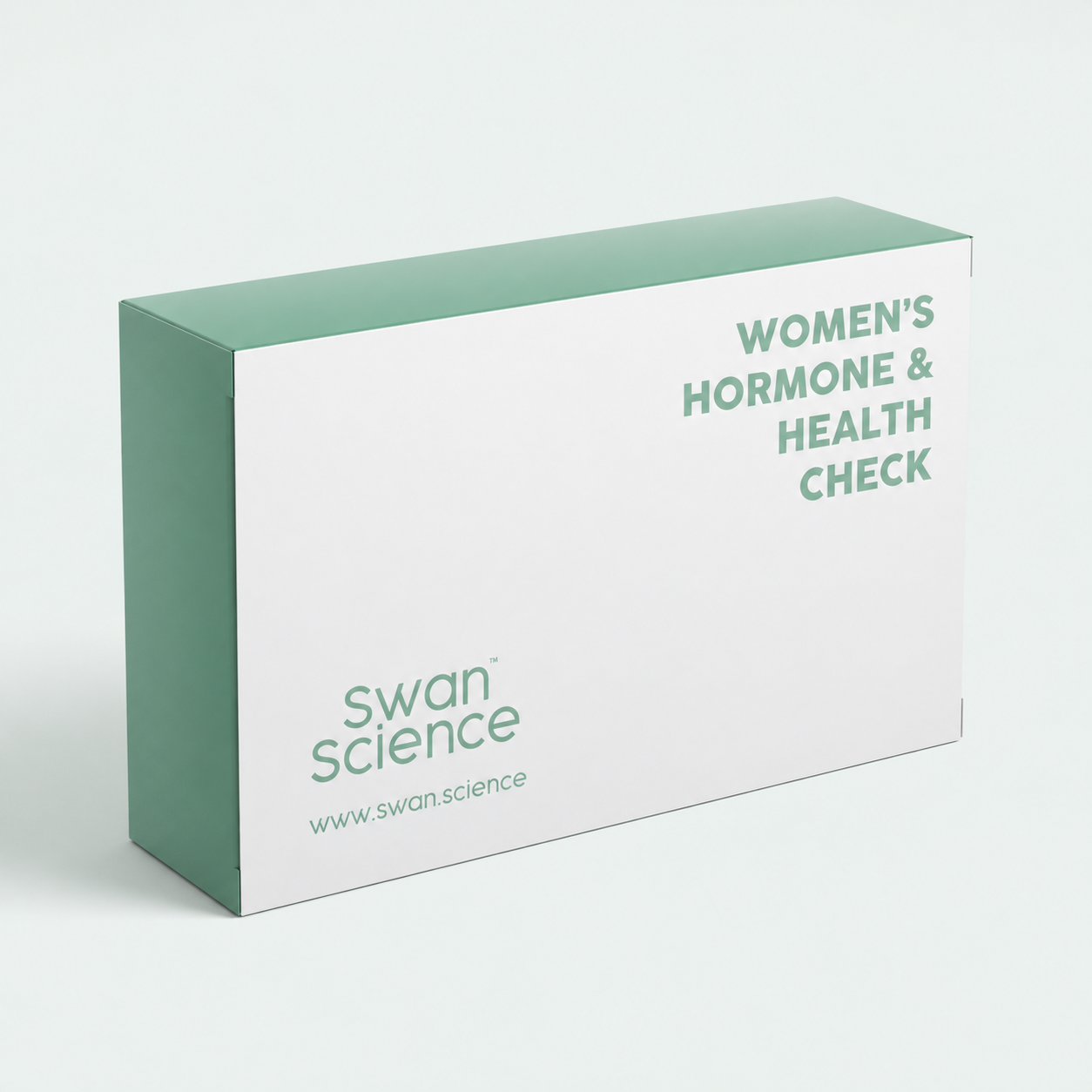
Swan Science Women's Hormone & Health Check is a comprehensive private blood test combining reproductive hormone measurements with a broader assessment of thyroid health, nutritional status, iron levels, cholesterol and blood sugar regulation.
Whether you're interested in your hormonal health, planning for the future or simply want to establish a personal health baseline, this assessment brings together a wide range of laboratory biomarkers in one convenient test.
Professional venous blood collection, specialist laboratory analysis and a detailed results report.
Why choose this health check?
Understand your hormonal profile
Measure key reproductive hormones including oestradiol, FSH, LH, progesterone, prolactin and testosterone.
Look beyond reproductive hormones
Explore thyroid markers, vitamins, iron status, cholesterol, glucose and other measurements relevant to your general health.
Establish a health baseline
Create a snapshot of selected biomarkers that may be useful for future comparisons.
Explore your reproductive health
The panel includes hormones commonly measured during reproductive health investigations. Results must be considered alongside your age, cycle timing and clinical history.
Choose additional AMH testing
Anti-Müllerian Hormone (AMH) testing may be added separately if available and appropriate to your circumstances.
What does the Women's Hormone & Health Check measure?
1. Female hormonal health
Measures hormones involved in reproductive and other physiological processes.
Biomarkers:
- Oestradiol
- Follicle Stimulating Hormone (FSH)
- Luteinising Hormone (LH)
- Progesterone
- Prolactin
- Testosterone
- Sex Hormone Binding Globulin (SHBG)
- Free Androgen Index (FAI)
Hormone results can vary considerably according to menstrual cycle stage, age, contraception, medication and other factors.
2. Thyroid health
A detailed thyroid assessment incorporating thyroid hormones and antibodies.
Biomarkers: Thyroid Stimulating Hormone (TSH), Free T3, Free T4, Anti-Thyroglobulin Antibodies and Anti-Thyroid Peroxidase Antibodies.
3. Vitamins and nutritional health
Measures selected nutrients important for normal physiological function.
Biomarkers: Vitamin D, Vitamin B12 and Folate.
4. Iron status
Provides information about circulating iron, iron stores and iron transport.
Biomarkers: Iron, Ferritin, Total Iron Binding Capacity (TIBC), Transferrin and Transferrin Saturation.
5. Full blood count
Examines red blood cells, white blood cells and platelets.
Biomarkers: Haemoglobin, Haematocrit, Red Blood Cell Count, MCV, MCH, MCHC, White Blood Cell Count, Neutrophils, Lymphocytes, Monocytes, Eosinophils, Basophils and Platelets.
6. Blood sugar and metabolic health
Measures selected biomarkers associated with glucose regulation.
Biomarkers: Glucose, HbA1c and Insulin.
7. Heart and cholesterol health
Provides a standard lipid assessment.
Biomarkers: Total Cholesterol, HDL Cholesterol, LDL Cholesterol, Triglycerides and Total Cholesterol/HDL Ratio.
8. Liver health
Measures selected liver-related enzymes and proteins.
Biomarkers: ALT, AST, ALP, GGT, Total Bilirubin and Albumin.
9. Electrolyte and mineral balance
Provides information on selected electrolytes and minerals.
Biomarkers: Sodium, Potassium, Chloride and Phosphate.
10. Stress-related hormones
Includes selected hormones associated with adrenal and hormonal function.
Biomarkers: Cortisol and DHEAS.
Single measurements do not establish whether someone is experiencing chronic stress or diagnose an adrenal disorder.
11. Inflammation
Biomarker: C-Reactive Protein (CRP).
CRP is a non-specific marker that may increase in response to inflammation.
Optional AMH testing
Would you like to include Anti-Müllerian Hormone (AMH)?
AMH provides information relevant to ovarian reserve and can help inform assessments of likely ovarian response during assisted fertility treatment.
AMH does not measure egg quality and cannot reliably predict your chances of conceiving naturally.
AMH is not included in the standard Women's Hormone & Health Check. Please contact Swan Science if you'd like to explore the AMH-inclusive panel.
How does the test work?
Step 1. Order your health check
Purchase your Women's Hormone & Health Check securely through Swan Science.
Step 2. Arrange your appointment
We'll contact you to arrange professional venous blood collection and provide relevant preparation instructions.
Step 3. Laboratory analysis
Your sample is analysed by a specialist pathology laboratory using established laboratory methods.
Step 4. Receive your results
You'll receive a detailed laboratory report showing your measured biomarkers and relevant laboratory reference ranges.
If you have abnormal results or ongoing symptoms, you should discuss them with your GP or an appropriately qualified healthcare professional.
When should I take the test?
Menstrual cycle timing is important.
For assessment of certain reproductive hormones, blood collection is often arranged between days 2 and 5 of the menstrual cycle.
Progesterone measurement for assessing ovulation is generally performed approximately seven days before the next expected period, which may require a separate blood sample.
If you take hormonal contraception, have irregular periods, are pregnant or have a specific reason for testing, seek appropriate advice on test timing before booking.
We will provide preparation instructions, including any fasting requirements, when arranging your appointment.
Who is this health check for?
This assessment is designed for adult women interested in exploring their hormonal and wider health measurements.
It may be of interest if you:
- Want to understand more about your reproductive hormones.
- Are interested in menstrual or hormonal health.
- Are considering future reproductive plans.
- Want to establish a general health baseline.
- Would like to assess thyroid, iron, vitamin and metabolic markers alongside hormones.
It is not a standalone fertility assessment, menopause diagnosis or substitute for medical investigation.
Understand your health. Know what to do next.
Your results provide a snapshot of selected laboratory measurements at the time of testing.
They can help inform conversations with a healthcare professional and provide a reference point if repeat measurements are appropriate.
Important information
This health check does not diagnose infertility, establish fertility potential, confirm ovulation from a single untimed sample, or replace a specialist fertility assessment.
Some hormones require testing at particular points in the menstrual cycle. Abnormal results must be interpreted in the context of medical history, symptoms and medication.
If you're experiencing persistent menstrual problems, fertility difficulties or other concerning symptoms, speak to your GP or an appropriately qualified healthcare professional.
The exact laboratory menu and sample requirements should be confirmed before booking if a particular biomarker is important to you.